
Natural Phocus exists to help people reconnect with calm, clarity, and presence through nature. Our work rests on a simple, well-supported idea: human attention and well-being are closely tied to the natural world, and even brief moments of quiet attention to nature can help the mind settle and recover.
We create nature photography designed for that purpose. Each image is chosen and composed to soften attention, ease mental noise, and offer a steady place for the mind to rest. We don't think of these prints as decoration. We think of them as small, lasting changes to the places where people live, learn, heal, and work.

Our approach draws on decades of research in environmental psychology. Attention restoration theory proposes that natural scenes hold our attention gently, giving the effortful focus we rely on all day a chance to recover. Research on stress recovery suggests that views of nature can support emotional and physiological recovery after stress. The biophilia hypothesis offers a broader explanation: having evolved in natural environments, people remain drawn to them.
Most of us need contact with nature more often than our days allow, and research suggests that even a few minutes each day can make a difference. Photographs are not a substitute for time outdoors, but images of nature can offer some of these benefits, providing a daily dose of nature for grounding and restoration in the places where real nature is out of reach: our homes, a windowless office, a hospital room, a busy classroom.
The work meets you without urgency
Natural Phocus is meant to be experienced slowly. There are no instructions and no right way to engage. Each image invites attention to soften and return, gently, to the present moment. In a private room or a shared space, the work offers a place to pause, breathe, and settle, and lets calm arrive on its own.

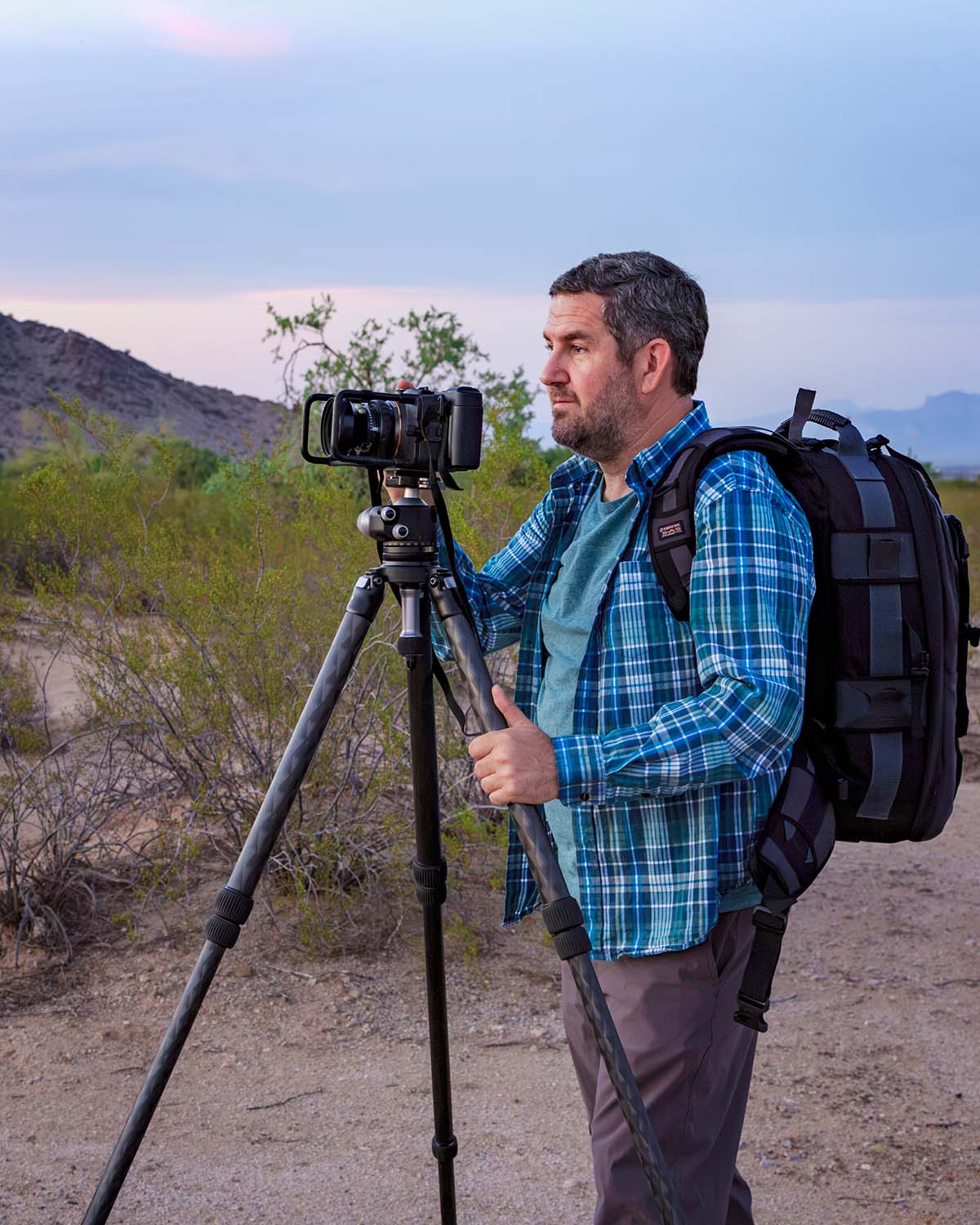
Natural Phocus was founded by Steve Austin, a psychology professor trained in behavioral neuroscience whose research focuses on stress, mental health, and the psychological effects of nature exposure. Steve photographs landscapes from Arizona’s Sonoran Desert to the redwoods of Northern California and the coast of New Zealand. For him, each image is less about the scenery than about the state of mind it can help restore.
Natural Phocus was founded by Steve Austin, a psychology professor trained in behavioral neuroscience whose research focuses on stress, mental health, and the psychological effects of nature exposure. Steve photographs landscapes from Arizona’s Sonoran Desert to the redwoods of Northern California and the coast of New Zealand. For him, each image is less about the scenery than about the state of mind it can help restore.