


Imagine a remedy with no known side effects, available almost anywhere, that could sharpen your thinking at no cost. That’s how psychologists Marc Berman, John Jonides, and Stephen Kaplan of the University of Michigan began a now-classic 2008 paper. The remedy, they argued, is time with nature.
Their reasoning comes from attention restoration theory. We rely on two kinds of attention. Directed attention is the effortful focus we use to concentrate and ignore distractions, and it tires with use. Involuntary attention is drawn effortlessly by things we find interesting. Natural scenes engage our attention gently, giving directed attention a chance to recover. City streets, by contrast, grab attention dramatically and demand directed attention at the same time; you have to stay alert just to avoid being hit by a car.
To test this, the researchers first tired out 38 university students with demanding mental tasks. Then each student took a walk of about 50 minutes, either through a tree-lined arboretum or along busy downtown streets, covering the same distance. Notably, the nature walk wasn’t through wilderness: the arboretum is a park near the university campus, the kind of green space many of us can reach on a lunch break. Before and after each walk, students completed a task that relies heavily on directed attention: listening to strings of numbers and repeating them backward. A week later, each student took the other walk. After walking in nature, students could hold about one and a half more digits than before; after walking downtown, the gain was small and unreliable. Their mood improved more after the nature walk, too, but changes in mood didn’t explain the gains in attention.
A second experiment asked whether pictures alone could have a similar effect. Twelve students spent about ten minutes viewing 50 photographs of either natural scenes or cities, then returned a week later to view the other set. Only after the nature photographs did their executive attention, the ability to stay focused amid distraction, improve. Other aspects of attention didn’t change, which pointed specifically to the kind of focus that tires with use.
One detail is especially telling. Both picture sessions took place in the same quiet room, so peace and quiet alone couldn’t explain the difference. Something about the nature scenes themselves restored attention. The researchers suggest that nature’s peacefulness comes from the way it holds our attention softly, allowing effortful focus to rest.
These were small studies with university students, and they measured short-term effects. Still, later research has supported the findings, including a study that found the same benefit for older adults, which we describe in another article on Clarity.
The practical lesson is to think of attention as a resource that can run low and be replenished. A walk through a park at lunch, or a few minutes with nature images between demanding tasks, may help restore the focus that a long day uses up.
Try it: The next time you notice mental fatigue, such as rereading the same sentence or losing your train of thought, step away for ten minutes. Walk somewhere green if you can. If not, look through a set of nature photographs slowly, letting each one hold your eye for a few seconds. Then return to your work and notice whether focus comes a little more easily.
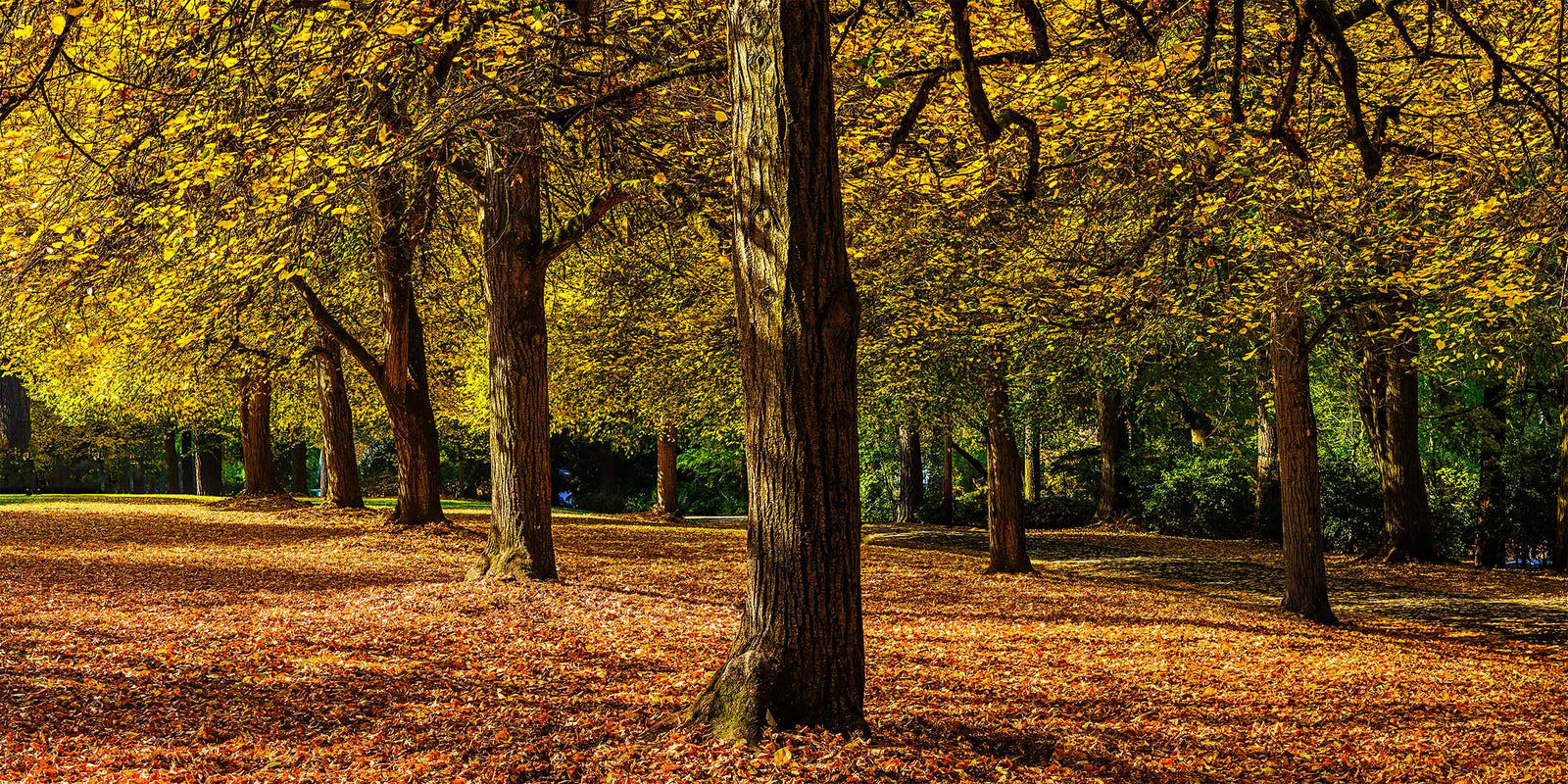
The image at the top of this article, A Walk Among Gold, was taken in a city park in Portland, Oregon, a reminder that restorative nature is often closer than we think.
Source: Berman, M. G., Jonides, J., & Kaplan, S. (2008). The cognitive benefits of interacting with nature. Psychological Science, 19(12), 1207–1212. https://doi.org/10.1111/j.1467-9280.2008.02225.x